
Driving through Málaga city centre: what you need to know to avoid fines
Posted on 31 October 2025
Over the past few months, we’ve noticed a rise in traffic fines among our clients driving through Málaga city centre. New restricted access zones and the introduction of the Low Emission Zone (LEZ) have changed the traffic rules – and many drivers only find out once they’ve already received a fine.
That’s why we’ve put together this guide to explain how these zones work, which streets are affected, and what you need to do to avoid fines. Take note!
What Is a Restricted Traffic Zone?
Restricted Traffic Zones, as the name suggests, are areas where vehicle access is limited in order to preserve the urban environment, reduce congestion, and improve pedestrian safety.
Also known as Special Traffic Protection Areas, these zones are typically located in the city centres of major cities – so it’s common to find them in places like Madrid, Barcelona or Granada.
The system works through surveillance cameras that record vehicle license plates. This allows the traffic control system to detect which vehicles are authorised to enter and which are not.
Restricted Access Areas in Málaga’s Historic Centre
The Málaga City Council has defined the following streets as part of the Restricted Traffic Zone (RTZ):
- Calle Carretería and Calle Álamos (Route No. 7), and Calle Sebastián Souvirón and Calle Sagasta (Route No. 8), as well as surrounding streets such as Cortina del Muelle, Puerta del Mar, Atarazanas, and Plaza de la Marina.
- Additional nearby streets, including Calle Larios, Plaza de la Constitución, and Calle Granada, are primarily pedestrian and may also be subject to access control.
Who can Enter Málaga’s Restricted Access Zones?
Only certain types of vehicles are authorised to drive in these areas:
- Emergency services (police, fire brigade, ambulances)
- Municipal and urban maintenance vehicles (cleaning, lighting, etc.)
- Residents with a registered home or parking space
- Delivery, loading, and unloading vehicles with a valid time-based permit
- Taxis, VTCs (private hire vehicles), and authorised hotel or tourist accommodation vehicles
- Construction or technical service vehicles with temporary permits
Málaga’s Low Emission Zone (LEZ)
The Low Emission Zone (LEZ) is an environmental measure required for all Spanish cities with more than 50,000 inhabitants. Its aim is to reduce air pollution and improve citizens’ health.
In Málaga, the LEZ came into effect on 30 November 2024, following the approval of the city’s sustainable mobility ordinance. The zone covers around 437 hectares, including the historic centre and surrounding areas.
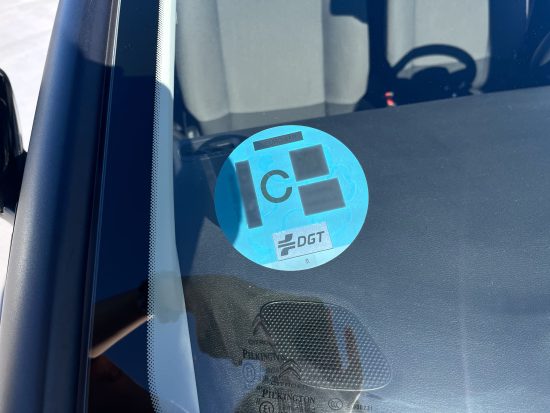
During 2025, a transition period will take place. Starting in November 2025, vehicles without an environmental label from the DGT and not registered in Málaga will no longer be allowed to enter this area.
The LEZ is monitored by a network of cameras and access points – for instance, 53 control points and 97 cameras were in operation when the system was launched.
Phases of the Low Emission Zone in Málaga
| Date / Phase | Affected Vehicle Labels | Measures and Description |
| December 2024 – October 2025 | All labels | Informative and transitional phase. All vehicles are still allowed, including unlabelled ones registered in Málaga. Public awareness campaigns are carried out, and camera systems are adjusted. |
| 1 November 2025 | 🚫 Unlabelled vehicles (not registered in Málaga) | Beginning of restrictions. Vehicles without an environmental label and not registered in Málaga are no longer allowed to enter the LEZ. Automatic fines are issued through the camera system. |
| From 2026 (expected: November 2026) | ⚠️ Label B (not registered in Málaga) | Second restriction phase. The City Council is considering extending the ban to vehicles with label B not registered in Málaga, depending on air quality and progress of the plan. |
| From 2027 onwards | General review | The City Council will evaluate the results and may extend further restrictions. |
Fines for entering in restricted zones in Málaga
Entering a restricted area in Málaga without authorisation can result in a financial penalty.
According to the city’s mobility ordinance, the standard fine is €200, although it can be reduced to €100 if paid within 20 calendar days (early payment discount).

At Helle Hollis, we handle this process in a transparent and straightforward way. When a fine is issued for one of our vehicles, we receive the notification directly and contact the responsible driver.
In addition, we offer an Infraction Management Service, through which we advise and assist our customers in case of any traffic violations during their stay in Málaga — ensuring a smooth and hassle-free driving experience.
| Type of Infraction | Description | Fine |
| Accessing the Restricted Traffic Zone (RTZ) without authorisation | Entering camera-controlled streets without the proper permit | €200 |
| Driving in the Low Emission Zone (LEZ) without a valid environmental label | Vehicles without the required DGT label or prohibited according to the current phase | €200 |
| Forgery or misuse of an access permit | Using temporary or resident permits fraudulently | Up to €500 |
| Ignoring restricted access or closed zone signs | Disregarding “Restricted Area” or “LEZ” signage | €200 |
How to pay a traffic fine in Málaga
If you’ve received a traffic fine, you can pay it quickly and easily. The Málaga City Council offers several payment options and applies a 50% discount if the fine is paid within 20 calendar days from the date of notification:
- Online payment: Visit Málaga City Council’s Electronic Headquarters (Traffic and Fines section). Enter your case or reference number and pay securely by credit or debit card.
- In person: At municipal citizen service offices or at collaborating banks (CaixaBank, Santander, BBVA, and others).
If you’d like to stay up to date on new regulations, driving tips, and the latest road updates across Andalusia, visit our blog and keep discovering how to drive with confidence through southern Spain.