
V16 Emergency light in Spain: complete guide
Posted on 09 January 2026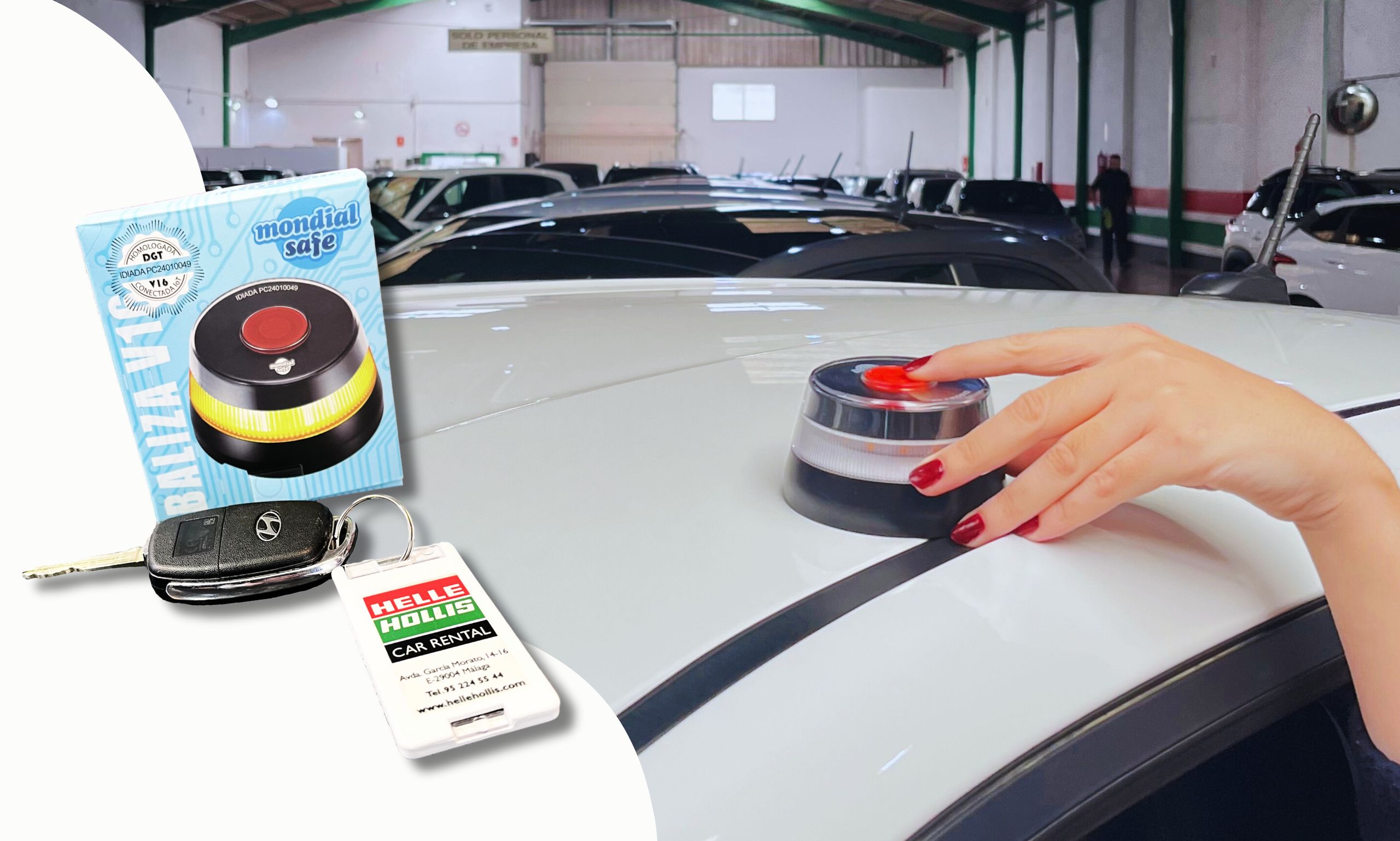
In recent months, there has been widespread discussion about the V16 emergency light, which as of 1 January 2026 has become the only authorised roadside warning system in Spain, replacing traditional warning triangles.
In this guide, we clearly and simply explain what the V16 emergency light is, when it is mandatory, how to use it correctly and what you need to know whether you are driving your own vehicle or hiring a car in Spain.
- 1. What is the V16 emergency light and why is it mandatory in Spain?
- 2. Key features of the V16 warning device
- 3. What to do in the event of a breakdown or accident in Spain
- 4. Hiring a car in Spain: mandatory roadside safety equipment
- 5. Fines and exceptions under Spanish traffic regulations
- 6. Frequently asked questions about the V16 warning light
What is the V16 emergency light and why is it mandatory in Spain?
The V16 warning light is a flashing amber device with a magnetic base. In a breakdown or accident, you place it on the roof of the vehicle. For that reason, keep it in the glove compartment so you can deploy it without leaving the car. It runs on batteries, so it does not rely on the vehicle’s electrical system.
Mandatory use and official approval in Spain
Spain has made this connected warning device as a road safety measure, with the aim of reducing the risk of collisions and accidents, particularly on motorways and high-speed roads.
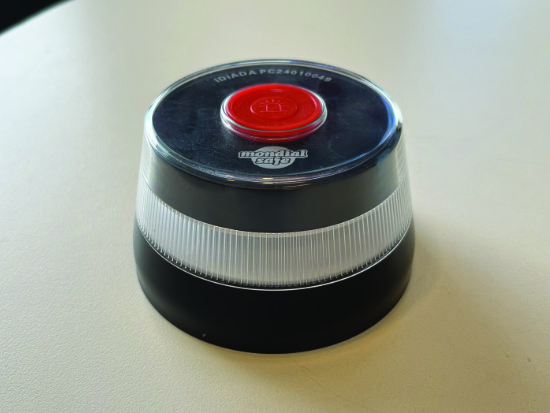
However, not every warning light is valid. To comply with the rules, choose a device that the Spanish Traffic Authority (DGT) has officially approved. This approval confirms that it meets the required technical and visibility standards.
Key features of the V16 warning device
To ensure that a V16 emergency light complies with regulations and functions correctly, it is important to understand its main features.
How to check if a V16 emergency light is approved by the DGT
To verify that this warning system complies with traffic regulations, you must check its approval number.
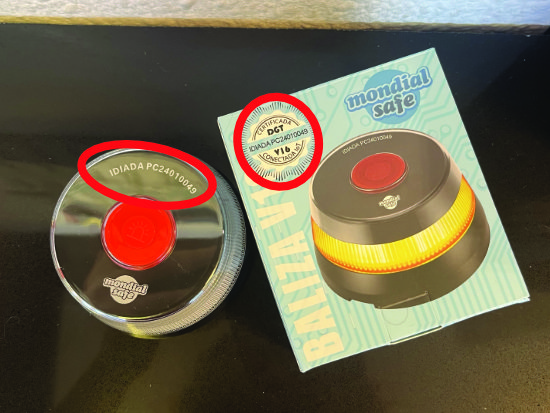
The approval number is a numeric code, usually shown with the testing laboratory name (such as IDIADA or LCOE). You will usually see it on the packaging and on the device itself. In addition, manufacturers often include it in the manual or on their website.
Once identified, this code can be checked against the official list of approved V16 emergency lights published by the Spanish Traffic Authority (DGT).
What does it mean for the warning light to be “connected”?
The DGT requires a connected warning light. When you switch it on during a breakdown or accident, it automatically sends your vehicle’s location to the DGT 3.0 platform. As a result, other road users receive an alert sooner.
For example, authorities can show the incident on variable message signs and some navigation systems. This extra visibility helps reduce secondary accidents.
As a result, the incident may be displayed on variable message signs and in the navigation systems of other vehicles, improving road safety.
Battery life and operation of the V16 light
The V16 light must emit a high-intensity flashing signal visible through 360° for a minimum of 30 minutes, allowing other drivers to detect a stationary vehicle. It operates using its own battery or batteries, with a minimum service life of 18 months.
To keep the device in good condition, it is recommended to follow the manufacturer’s instructions and, where advised, remove the batteries after use.
What to do in the event of a breakdown or accident in Spain
If you break down or have an accident, stay calm and prioritise safety. First, stop in a safe place whenever you can. Then switch on the hazard warning lights to alert other drivers. Remember to keep your seat belt fastened while you wait, especially on motorways and fast roads.
Next, activate the warning light and place it on the roof of the vehicle, ideally without leaving the car (for example, through the window). The magnetic base will secure it in place and clearly signal the vehicle while you wait for assistance.
It is important to note that although the V16 emergency light transmits the vehicle’s location to the DGT, it does not contact emergency services. In the event of an emergency, you must always call 112.
Hiring a car in Spain: does it include the mandatory V16 emergency light?
If you are travelling to Spain and plan to hire a car, it is advisable to check in advance whether the vehicle includes the mandatory V16 emergency light. Not all car hire companies provide the same equipment, and knowing this before collecting the vehicle can help avoid unexpected issues during your trip.
Helle Hollis complies with approved V16 emergency light requirements
At Helle Hollis, all our hire vehicles are equipped with an approved V16 emergency light, allowing our customers to drive in Spain with complete peace of mind and without worrying about local regulations.
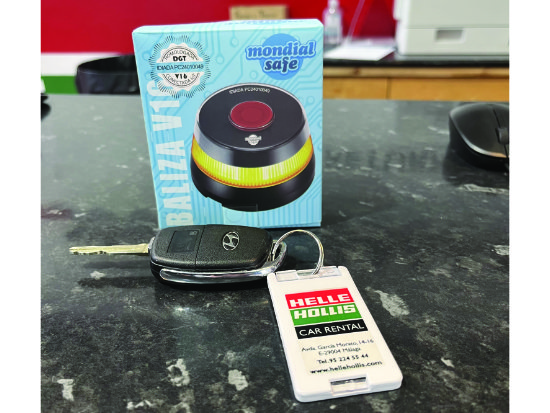
Our aim is to provide a safe and straightforward driving experience, always offering fully prepared vehicles and clear guidance.
Fines and exceptions under Spanish traffic regulations
From 1 January 2026, failing to carry an approved and connected V16 emergency light may result in a €80 fine, as stated by the Spanish Traffic Authority (DGT). As with other minor traffic offences, early payment reduces the fine by 50% (€40) if paid within the specified period.
Key exceptions:
- The requirement applies only to vehicles registered in Spain.
- Vehicles with foreign number plates may use the warning systems required in their country of registration.
🚨 Important update: The Government has confirmed that there will be a “reasonable” adaptation period before fines are imposed, meaning penalties will not be applied immediately. Further official clarifications are expected in the coming weeks.
Frequently asked questions about roadside warning devices
Where should the V16 emergency light be placed?
The V16 emergency light must be placed on the roof of the vehicle, preferably in the centre, to ensure 360° visibility. It is designed to be deployed without leaving the car, reducing risk to the driver.
Is the V16 emergency light mandatory for foreign-registered vehicles?
No. The obligation applies only to vehicles registered in Spain. Vehicles with foreign number plates may use the warning devices required by their country of origin while driving in Spain.
Is the V16 emergency light mandatory in Portugal or Gibraltar?
No. The V16 emergency light is mandatory only in Spain. When driving in Portugal or Gibraltar, warning triangles and a reflective vest must be used in accordance with local regulations.
What distance is the V16 emergency light visible from?
The V16 emergency light emits a high-intensity flashing light visible through 360°, designed to be seen from a minimum distance of 1 kilometre (1,000 metres) in normal visibility conditions, both day and night.
Can I still use warning triangles?
No. In Spain, warning triangles will no longer be valid as a roadside warning system from 1 January 2026. The connected V16 emergency light is the only authorised device for signalling breakdowns or accidents.
The connected warning system is now a key element of road safety in Spain, and understanding how it works, when it is mandatory and what exceptions apply helps drivers respond correctly in the event of a breakdown or accident.
On our blog, we continue to publish up-to-date information on driving in Spain, road safety and traffic rules, helping drivers travel with greater confidence and fewer surprises. See you on the road! 🚗